
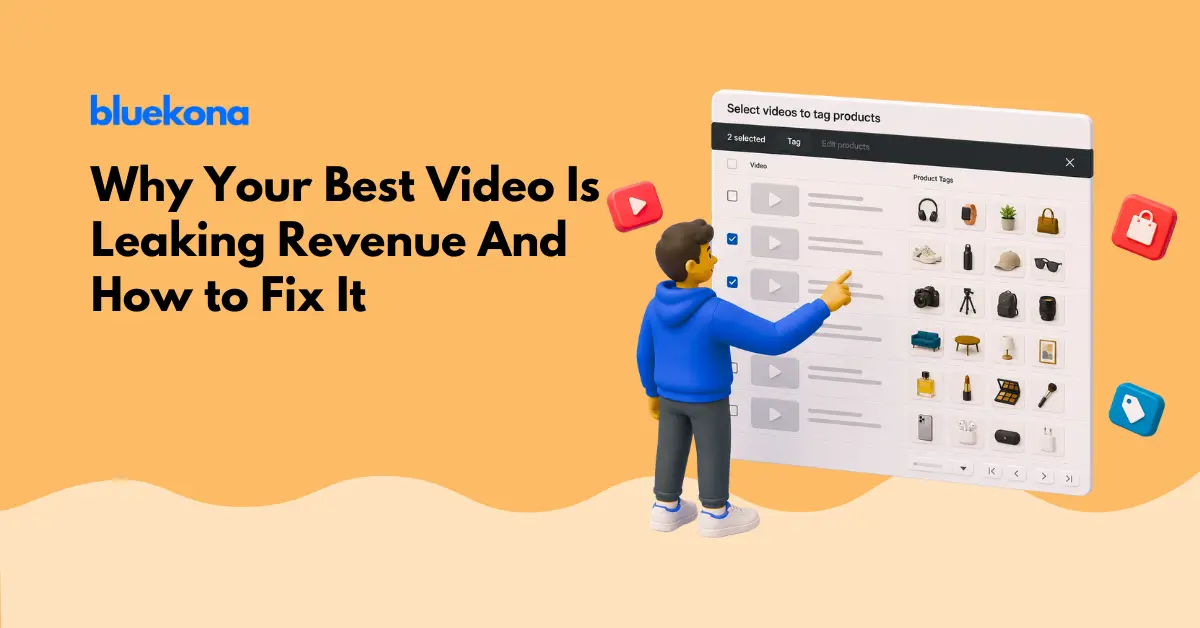
Why Your Best Video Is Leaking Revenue (And How to Find It in 10 Minutes)
Somewhere in your channel is a video that is doing everything right. Good views, strong retention, comments full of people asking where to buy the thing you mentioned. And somewhere in that same video is a missing tag, a dead link, or a description that never got updated, quietly handing money to nobody.
You would notice if a sponsor stopped paying you. You are far less likely to notice a broken affiliate link sitting in a video that is still getting views a year later. That is the entire problem with revenue leaks. They do not show up as a dramatic drop. They show up as nothing at all, just money that was always supposed to arrive and never does.
The Video That’s Working and Still Losing You Money
Picture a mid-size cooking channel, a few hundred thousand subscribers, posting steady weekly recipes. One video, a fifteen-minute butter chicken tutorial, pulls in 2.4 million views. By every normal measure, that is a hit. Except when someone actually checks the video, three products mentioned on camera were never tagged. No affiliate link, no description mention, nothing for a viewer to click even if they wanted to buy the pan or the spice blend on screen.
That is not a hypothetical. It is close to the exact situation Bluekona surfaces constantly when creators run their first channel audit, high performing videos sitting right next to a revenue gap nobody had gone looking for. The video is not underperforming. The monetization behind it is.
What a Revenue Leak Actually Looks Like
Missing Product Tags
You mention a product on camera, maybe even show it, but never add the tag, the pinned comment, or the description link that turns that mention into a click. This is the most common leak, and it is almost always accidental. You are focused on the edit, the thumbnail, the title. Tagging every product mentioned in a fifteen-minute video is easy to forget.
Broken or Expired Affiliate Links
Retailers restructure their affiliate programs. Amazon updates its associate link format. A product gets discontinued and its page redirects somewhere useless. None of this shows up in your analytics as a problem. It just quietly stops paying out, sometimes for months before anyone notices.
Untimed Tags on Your Highest-Retention Moments
Even when a tag exists, where it appears in the video matters. A tag sitting in the description with no timestamp asks viewers to go hunting for it. A tag with a timestamp, placed right at the moment the product appears on screen, catches people while their interest is highest. The data backs this up clearly, tagged products paired with a timestamp get 43% more clicks than a description link alone, according to YouTube’s own internal figures from January 2025.

Creators are excellent at making things people want to watch. Most are terrible at bookkeeping. Both things can be true, and only one of them is costing you money.
Why This Happens Even to Careful Creators
Nobody sets out to leave money on the table. It happens because the work of making a video and the work of maintaining its monetization live on completely different timelines. You publish once. The video keeps earning, or should keep earning, for years. But nobody goes back and checks whether the affiliate program you joined two years ago still uses the same link format, or whether that discontinued product page is now redirecting to a 404.
Channels growing fast feel this the most. More videos, more products mentioned, more affiliate relationships to track, and no time built into the schedule for checking any of it. The bigger the back catalog gets, the bigger the blind spot gets with it.
How Much This Is Actually Costing You
The scale here is bigger than most creators assume. Misattribution and broken redirects alone cause creators to miss more than half of the affiliate revenue they are technically entitled to, based on Button’s creator commerce data cited in 2026 industry reporting. Meanwhile creator affiliate revenue as a category grew 47% year over year in 2026 and now makes up 24% of total affiliate spend, up from just 11% in 2022, according to Awin’s 2026 affiliate marketing statistics. The pie is growing quickly. A leak in your share of it costs more every year it goes unfixed, not less.
The Real Cost Isn’t the Missing Tag
It’s the compounding effect. A video that keeps earning views for years also keeps losing the same untagged revenue for years. Fixing one video today is worth more than fixing ten videos five years from now, simply because of how much longer the fix has to work in your favor.
The 10-Minute Audit
This does not require new software or a weekend. It requires ten focused minutes and a willingness to actually click your own links.
Step 1, Pull Your Top 20 Videos by Views
Sort your channel by views, not by upload date. Your highest performing videos are where a small fix produces the biggest return, since they have the most eyeballs still landing on whatever tag or link sits underneath them.
Step 2, Check Tags Against What You Actually Say
Watch the first thirty seconds and skim the middle of each video. Note every product, tool, or brand you mention out loud or show on screen. Then compare that list against what is actually tagged in the description or pinned comment. Gaps show up fast once you are looking for them on purpose.
Step 3, Click Every Link
Not skim, click. A link that looks fine in the description can still redirect to a dead page, an out of stock listing, or a generic homepage instead of the actual product. This step alone catches most of the silent leaks in an older back catalog.
Step 4, Flag and Fix
Keep a simple list as you go, video, timestamp, what’s missing or broken. Fix the highest-view videos first. A single afternoon spent working through this list against your top twenty videos usually closes the biggest gaps in your entire channel.
Checking your own affiliate links is not glamorous content. It is, without question, the highest return on ten minutes you will get all week.

Building a Habit So It Doesn’t Happen Again
A one-time audit fixes today’s leak. It does not stop tomorrow’s. The creators who actually keep this under control build a small habit around it instead of treating it as a one-off cleanup project.
| Leak type | What it looks like | How often to check | Risk if ignored |
|---|---|---|---|
| Missing product tags | Product shown or mentioned, no tag added | Every new upload | High |
| Broken affiliate links | Link redirects to a dead page | Monthly, top 20 videos | High |
| Untimed tags | Tag exists only in description | Quarterly review | Medium |
| Outdated program links | Old link format no longer tracked | When program terms change | Medium |
| Discontinued products tagged | Tag points to a product that no longer exists | Twice a year | Low |
Tags added once at upload and never revisited. Links trusted forever. Older top-performing videos treated as finished, not as ongoing income.
Top videos re-checked on a schedule. Links clicked, not just glanced at. Every new upload tagged completely before it goes live, not fixed later.
Running a habit like this manually across dozens or hundreds of videos is exactly where it falls apart for growing channels. This is the gap a proper YouTube channel audit is built to close, one pass across your whole library instead of a mental note you keep meaning to act on.
Your Back Catalog Is Still a Revenue Channel
It is easy to think of monetization as something that happens at publish time and then stops mattering. The numbers say otherwise. 63% of global viewers say they have bought something they first discovered on YouTube, according to YouTube’s own Culture and Trends team, and shoppable video placements across YouTube, TikTok, and Instagram grew 71% year over year. Viewers are already primed to buy from video. The only question is whether your older content still gives them a working way to do it.
Every video sitting in your back catalog with views still trickling in is a small, ongoing revenue channel, whether you are actively thinking about it or not. Treating your top twenty videos as something to audit and maintain, not something you finished the day you hit publish, is the difference between a channel that grows its return on existing content and one that keeps making new videos to replace the earnings the old ones quietly stopped delivering.

Your old videos didn’t stop earning because people stopped watching. They stopped earning because nobody went back to check on them. Big difference.
Find Out Which of Your Top Videos Are Actually Leaking
Run the free YouTube Channel Audit and see which of your videos are missing tags, carrying broken links, or sitting on untapped revenue right now.