
Why Paid Marketing Feels Easy But Might Be Holding Your Brand Back
Ever feel like you’re doing everything right with your ads, but something still feels… off?
You’re not alone.
If you’re a founder or marketer pouring thousands into paid ads each month, it makes total sense. They’re fast. Predictable. Scalable. You can track every click, A/B test every headline, and turn the faucet on or off whenever you want.
But here’s the thing no one talks about — behind all those dashboards and ROAS reports, many brands feel uneasy — like they’re building momentum on rented land. Because the moment you stop paying? The growth stops too.
Meanwhile, organic marketing — social, search, content, community — sits underfunded, half-baked, or just flat-out ignored. Why? Because it’s hard. It’s slow. And it doesn’t always show immediate results.
But what if that’s the point?
Let’s understand why the easy path might be costing you more than you think — and what a smarter, more sustainable approach really looks like.
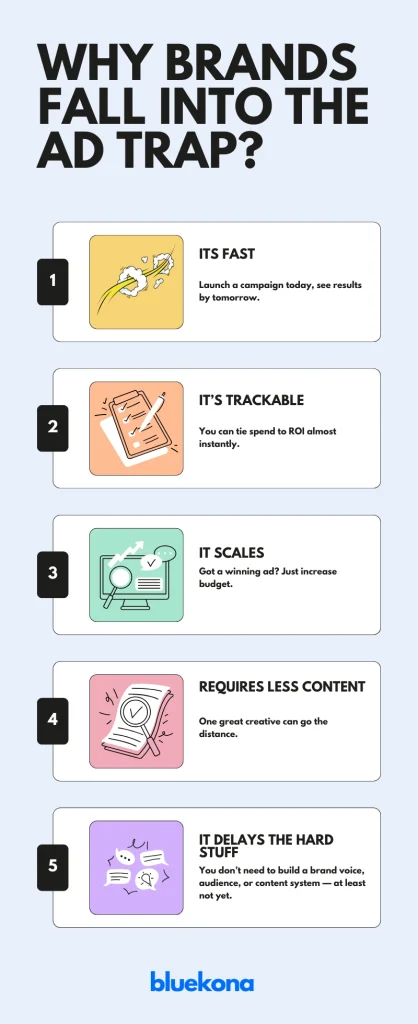
The Trap: Why Brands Default to Paid
Let’s be honest — paid marketing is easier.
You set a budget, pick your audience, launch your campaign… and boom — traffic, leads, conversions.
It’s fast, measurable, and under your control. No brainstorming content for hours. No worrying about engagement. No waiting.
That ease comes at a cost — and we’re not just talking money.
But here’s the trap: just because something works fast doesn’t mean it works forever.
Think of paid ads like a high-speed treadmill. You jump on, crank it up, and start sprinting. It’s efficient, controlled, and it delivers results instantly — as long as you keep running.
Meanwhile, organic marketing? That’s like planting a garden. You dig, you water, you wait. At first, nothing happens. Then slowly, you see signs of life. Eventually, that garden feeds you endlessly.
The problem? Most brands never make it past the digging.
Here’s why they stay on the treadmill:
Speed > Strategy
In a world of quarterly targets and investor updates, paid delivers immediate wins. Organic takes longer, and that delay feels risky.
Measurable > Messy
Paid marketing gives you clean numbers: CPC, CTR, ROAS. Organic? The metrics are murkier — how do you measure trust or community impact in a spreadsheet?
Control > Creativity
You don’t need a creative genius to launch ads. But organic growth? That requires storytelling, visuals, relevance — and real effort.
HubSpot reports that businesses that blog consistently generate 67% more leads than those that don’t. And SEO leads have a 14.6% close rate, compared to just 1.7% for outbound methods like ads.
Paid media creates the illusion of momentum. You feel like you’re growing — fast — and it’s scary to pause and risk losing ground. No one wants to go to their boss or board and say, “Let’s slow down and build something meaningful.”
But without a foundation, you’re just renting attention — not earning it.
Organic? Not So Much.
Now let’s talk about the other side of the coin: organic marketing.
You know, the slow burn. The long game. The thing everyone says they want to do… until they actually try it.
Because here’s the truth — creating high-quality, engaging, consistent content across multiple platforms isn’t just posting on Instagram twice a week. It’s a full-time job — or more like five.
Here’s what organic really takes:
- Time – Content doesn’t go viral on command. Building traction organically means posting even when no one’s watching.
- People – Writers, designers, editors, strategists, community managers… organic isn’t a solo mission.
- Tools – You’ll need scheduling platforms, analytics dashboards, SEO software, creative apps — and they add up fast.
- Patience – SEO takes months. Algorithms are fickle. Organic is slow by design.
- Strategy – Random content gets random results. You need a plan, a calendar, and a clear brand voice that actually resonates.
- That’s a big ask — especially for lean teams juggling launches, sales, product updates, and, yes, paid ads.
Why Most Brands Give Up Before It Gets Good
- You commit to organic.
- You post a few times. Engagement is… meh.
- The team gets busy. No one owns the calendar.
- Content becomes inconsistent or tone-deaf.
- Metrics don’t move, so leadership loses interest.
- You fall back on paid.
Sound familiar?
A 2023 Content Marketing Institute report found that 52% of marketers say creating content consistently is their biggest challenge — and 39% say their team lacks the capacity to execute a full content strategy.
The real results come when you build the habit — and stick with it long enough for the compound effect to kick in.
And most brands? They never make it past that awkward, invisible phase where it feels like you’re shouting into the void.
Paid vs Organic
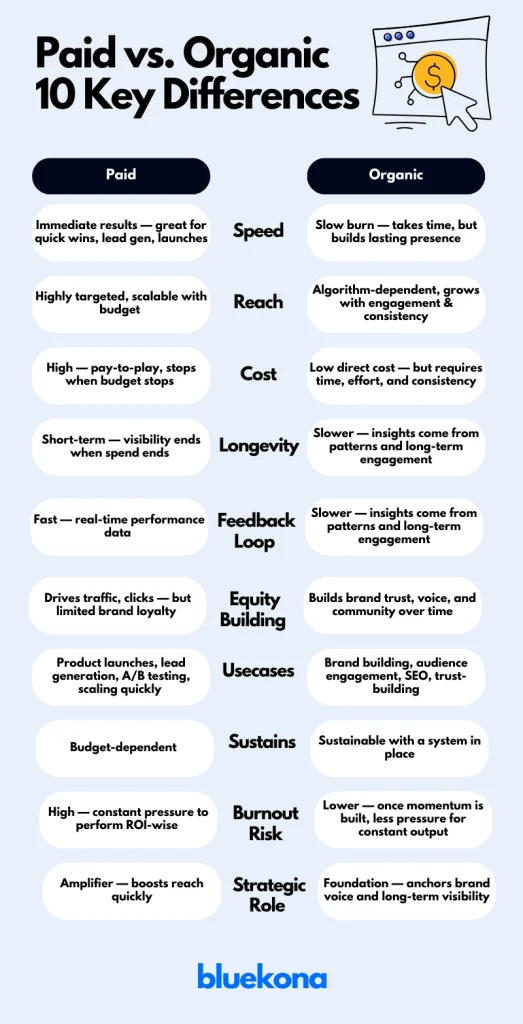
Let’s call it what it is: paid marketing is a sprint. Organic is a marathon. Both have their place — but they serve very different purposes.
So, how do they stack up side by side?
Paid Marketing
Paid is fast. Predictable. Scalable. You know the playbook:
- Launch a few test ads.
- Optimize based on performance.
- Scale what works.
At first, it’s smooth sailing. Your CPMs look good. Leads are rolling in. Everything feels like it’s working
But then… saturation hits. CPMs go up. Creative performance dips. ROI starts to flatten.
And here’s the kicker — The moment you pause your budget? The growth stops. Cold.
Organic Marketing
Organic starts slow. Like, painfully slow.
You post. Tweak. Test. Repeat. At first, no one sees it. No one clicks. No one cares.
But then… it starts working. SEO kicks in. People begin engaging.Content gets shared. Trust builds.
And suddenly? You’re getting traffic, leads, and reach — without paying for every impression.
It’s not a treadmill. It’s a flywheel. And once it’s spinning, it gets easier with time.
The Key Difference?
Paid gives you reach right now. Organic builds reach forever.
The smartest brands? They don’t choose one or the other. They use paid to fuel the now — and organic to own the future.
So Why Isn’t Everyone Doing Organic?
If organic marketing works so well… why aren’t more brands all-in?
Simple. Because for most teams, organic feels broken.
Not because it doesn’t work — but because it’s hard to do it consistently, effectively, and at scale.
Let’s break that down.
Here’s what it really takes to make organic work:
- Coming up with content ideas — every. single. week.
- Adapting those ideas to different formats (blog, LinkedIn, Instagram, TikTok, newsletter…)
- Maintaining brand voice — across every channel, no matter who’s writing.
- Posting regularly — without burning out or ghosting your audience.
- Analyzing performance — and actually acting on what’s working.
That’s a lot of moving parts. And most teams? They’re already stretched thin.
So what happens?
They try it. They get a few posts out.
Engagement is low.
The team gets pulled into other priorities.
The content slows… then stops.
And paid starts looking really good again.
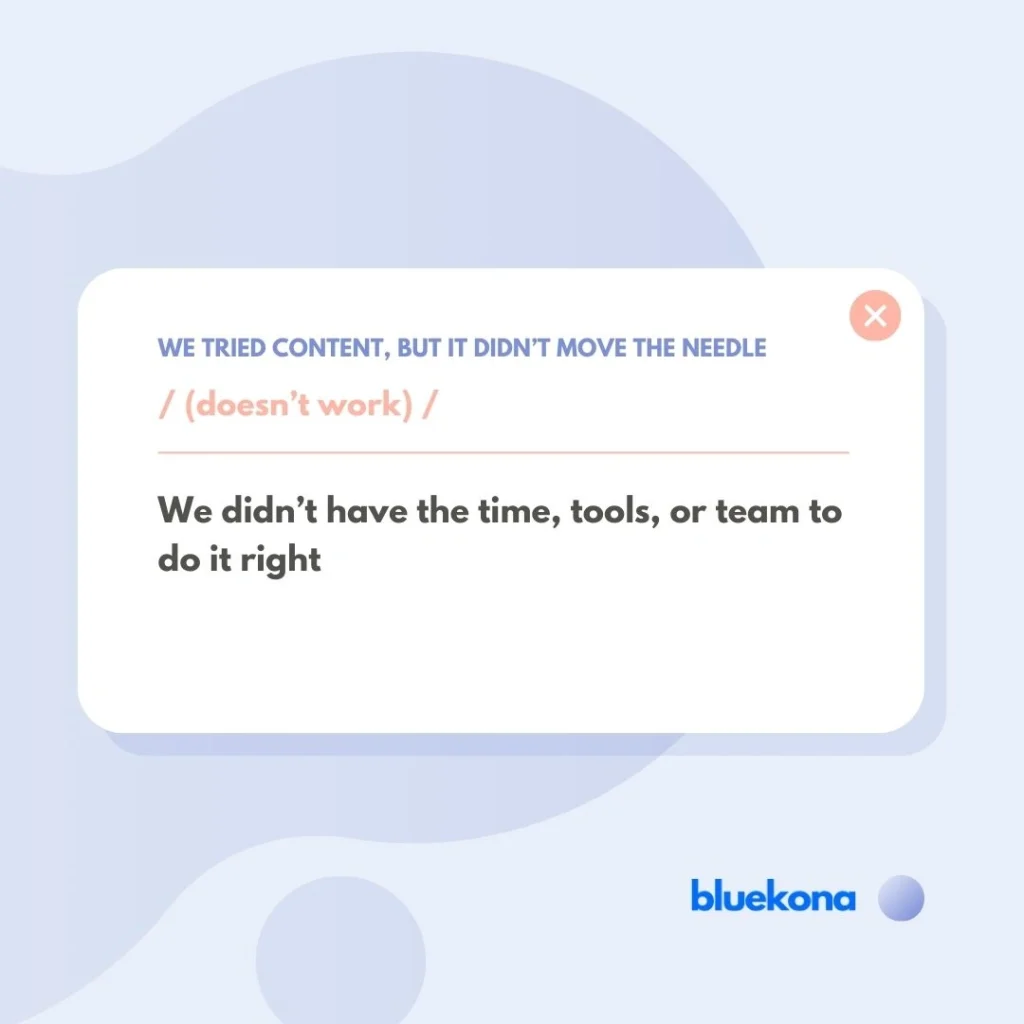
It’s not that organic can’t scale — it’s that most brands don’t have the system to scale it.
And that’s where everything changes.
Because now, we’ve got a tool that removes the friction, lifts the heavy parts, and helps brands finally make organic work – AI.
How AI Makes Organic Marketing Sustainable
Let’s be clear: AI isn’t a magic wand. It won’t write viral posts on autopilot or turn average content into gold. But what it can do — and where it really shines — is removing the friction that makes organic marketing feel unmanageable.
Because most of the time, it’s not the ideas that hold teams back.
It’s the execution.
Deadlines slip. Platforms change. Writers burn out. Strategy gets buried under other priorities. AI helps smooth those bumps in the road — so you can stay consistent without needing a huge team or endless hours.
Here’s how
1. Repurpose content across formats and channels
That LinkedIn post? It could be an email. A blog intro. A short-form video script.
AI helps you take one strong idea and translate it across platforms — without losing your voice or message.
2. Analyze performance and suggest next steps
What’s working? What’s not? What should you post next?
AI can spot patterns faster than you can — and use that insight to guide content planning, not just report on the past.
3. Optimize for tone, timing, and audience
Whether you’re writing for founders on LinkedIn or consumers on Instagram, AI can help adjust your content to fit the tone, style, and language your audience expects — all without starting from scratch.
4. Automate publishing without sounding robotic
Scheduling tools have been around forever, but AI adds a layer of intelligence. You can maintain a consistent posting rhythm — and even localize, personalize, or tweak for context — at scale.
The goal isn’t to replace your creativity.
It’s to protect it — by clearing the repetitive, operational work that usually gets in the way.
When used well, AI doesn’t just make organic marketing easier. It makes it possible — for small teams, fast-growing brands, and anyone tired of starting from zero every time they open a content calendar.
What’s the Right Move?
Paid marketing isn’t the enemy. In fact, it’s incredibly effective — especially when speed is the priority.
Need to generate leads this quarter? Paid gets you there.
Launching a new product? Paid can get eyes on it fast.
Want to test a message, an offer, a creative direction? Paid gives you immediate feedback.
But it comes at a cost. Literally. And once the spend stops, the momentum usually does too.
Organic, on the other hand, builds slowly — but it sticks.
It creates visibility that doesn’t disappear when budgets shift.
It builds brand equity, not just clicks.
And when you get it right, it starts paying you back long after you hit “publish.”
Smart brands don’t pick sides. They blend both — but they don’t ignore organic.
Because the brands that will win the long game aren’t the ones with the biggest ad budget. They’re the ones that show up consistently, deliver real value, and own their visibility.
The key is having a system that lets you do organic well — and do it sustainably.
That’s where tools like AI can unlock a new level of consistency, creativity, and clarity — especially for brands that have struggled to make organic work in the past.
Wrap Up
If you’re stuck in the paid trap — always spending, always optimizing, but never compounding — it’s time to step back.
Because growth shouldn’t vanish the moment your budget pauses.
At bluekona AI, we’re building tools and systems that make organic feel less like a grind and more like a growth engine. Not just content for the sake of it — but content that builds trust, attracts the right audience, and works even when you’re not online.
Paid will always have a role to play.
But the future belongs to brands that know how to grow without always paying for it.