
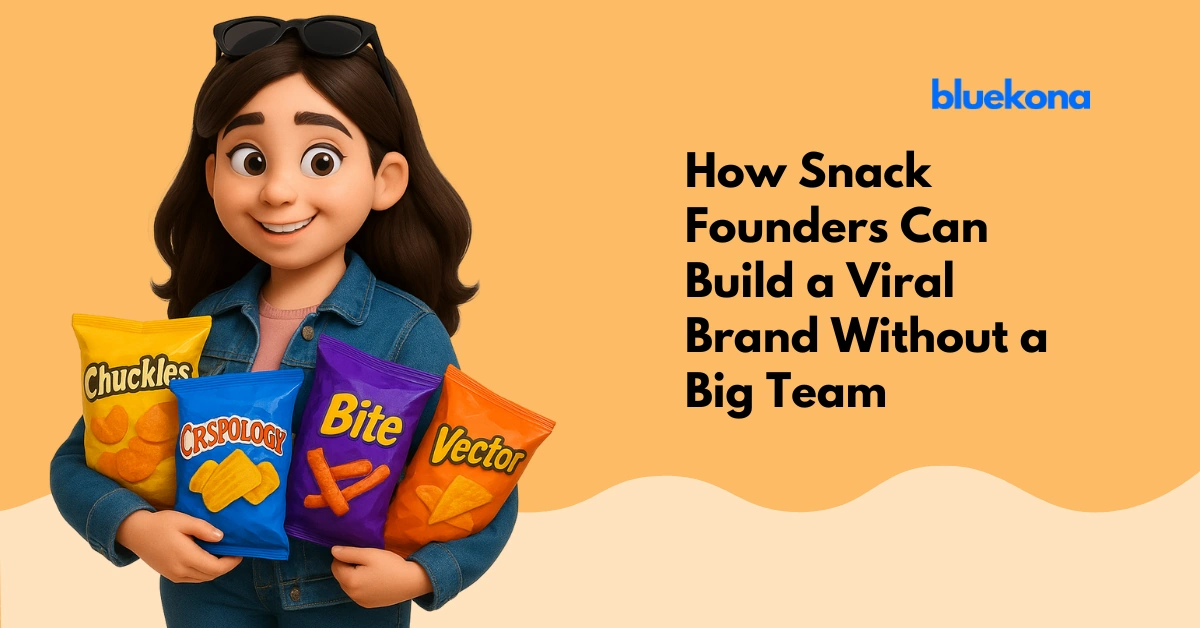
How Snack Founders Can Turn One Chip Bag into 10,000 Views
The snack aisle is now digital. Your next customer probably saw your chips on TikTok before they ever spotted them on a grocery shelf. They craved your popcorn because an influencer made it look irresistible. They bought your protein bars because a Reel made them hungry at 11 PM.
Here’s what’s wild: 93% of Americans regularly see food content on social media, and food-related posts make up nearly 40% of their feeds. That’s not background noise—that’s your battleground.
Yet most snack solopreneurs are posting blind. They’re churning out content without knowing which posts actually drive cravings, clicks, or conversions. They’re guessing at strategy when they should be analyzing data.
Without a social media audit, your content strategy is just expensive guesswork. And in an industry where 34% of U.S. consumers discover new snacks via social media—and 40% literally snack while scrolling—you can’t afford to guess.
The big brands get it. Doritos has over 1 million Instagram hashtags. Oreo dominates with 9.7 million. Kit Kat sits pretty at 3.7 million. That’s not luck or legacy—it’s consistent, data-informed branding. And you can do it too.
What a Social Media Audit Actually Does (and Why It Matters)
Think of a social media audit as your marketing taste test. It’s a structured review that helps you understand your flavor of content performance—what’s working, what’s stale, and what deserves to be your signature recipe.
For snack solopreneurs, an audit means knowing:
- Which flavors, packaging shots, or product angles resonate most
- Which videos or posts drive engagement spikes (and which ones fall flat)
- Where your audience scrolls, comments, saves, and actually buys
- How you stack up against competitors in the same category
The purpose? To measure your brand awareness, audience demographics, and ROI across every platform—so you can turn scattered likes into a clear growth recipe.
A social media audit helps snack founders stop throwing content at the wall and start building a system that feeds sustainable growth.
How to Conduct a Social Media Audit (Step-by-Step for Snack Brands)
Ready to get tactical? Here’s how to run an audit that’s quick, strategic, and realistic—no agency required.
Step 1: Inventory Your Social Channels
Start with a complete list of every account: TikTok, Instagram, YouTube, Facebook, even that Twitter account you started and abandoned in 2021. If it has your brand name on it, it matters. Dormant profiles can confuse customers and hurt your credibility.
Step 2: Gather Post Performance Data
Pull metrics on engagement rate, link clicks, saves, comments, and shares. Look at the last 90 days minimum—ideally six months if you’re seasonal (think summer snacks vs. holiday gift sets).
Pro tip for snack brands: Categorize your content by theme. Analyze “flavor content” (spicy launches, sweet collabs, limited editions) versus evergreen posts (brand story, behind-the-scenes, product benefits). Which type actually moves the needle?
Step 3: Identify Audience Insights
Who’s actually engaging with your content? Dig into age, region, interests, and behaviors. Are you reaching protein-obsessed gym-goers? Late-night snackers? Parents looking for lunchbox options? Your product positioning should match who’s showing up, not who you hope shows up.
Remember: 55% of Millennials and Gen Z consider themselves savvy snackers, with 32% turning to social media for snack inspiration. If you’re not showing up in their feeds with the right message, someone else is.
Step 4: Compare Your Top-Performing Posts
Which posts went viral, and why? Was it humor? Crunch sound ASMR? A trending audio? An influencer collaboration? Look for patterns across your winners.
For younger generations, social media (73%), video content (71%), and food influencers (61%) are the primary ways they discover new snacks. If your top posts don’t leverage at least one of these formats, you’re leaving engagement on the table.
Step 5: Run Competitor Checks
Benchmark yourself against similar snack startups and established players like Lay’s, Pringles, Doritos, or Hershey’s (which generates over 1 million hashtags). What are they doing that you’re not? Where are they falling short that you could capitalize on?
Look at their posting frequency, content mix, engagement rates, and how they’re riding trends. Are they leaning into health claims? Adventurous flavors? User-generated content? Steal what works, skip what doesn’t.
Step 6: Identify Strengths, Weaknesses, Opportunities, and Threats
Run a SWOT analysis on your social presence:
- Strengths: What content formats consistently perform? Where do you overdeliver compared to competitors?
- Weaknesses: Which platforms are you ignoring? What content types underperform?
- Opportunities: Emerging trends you haven’t tapped (61% of Americans are open to trying sweet and smoky snacks—are you talking about this?)
- Threats: Where are competitors dominating conversations you should own?
Don’t forget the macro trends. “Better-for-you” snacks are driving 64.1% of consumer interest in 2025, with 55% pointing to protein as the most important health claim. If your audit shows you’re not addressing these demands, that’s a massive opportunity gap.
Step 7: Build Your Audit Report
Don’t let your findings die in a Google Doc. Summarize key takeaways and translate them into action: next month’s content themes, optimal posting times, platform priorities, and budget allocation.
Better yet, skip the three-hour spreadsheet session entirely. bluekonaAI automates every step—tracking performance across TikTok, Instagram, and YouTube so you know exactly what’s working without manual data pulls, formula errors, or decision paralysis.
What to Include in a Snack Brand’s Social Media Audit Report
Your audit report should be lean but comprehensive. Focus on insights that change your strategy, not vanity metrics that stroke your ego. Include:
Post Performance Metrics: Engagement rate, reach, saves, shares, and link clicks. Which posts actually drive action?
Content Mix Analysis: Break down performance by content type—product shots, user-generated content, taste tests, recipe ideas, behind-the-scenes, trends. What ratio works best for your brand?
Platform Breakdown: Understand what each platform does for you. TikTok drives trends and viral moments. Instagram showcases beautiful, “Instagrammable” visuals. YouTube hosts longer-form recipe content and reviews. Facebook connects with an older demographic looking for product info.
Audience Insights: Demographics, active times, interests, and behaviors. Are you reaching the right people at the right moments?
Top Influencers and Advocates: Who’s already tagging or mentioning your brand organically? These are your low-hanging fruit for partnerships and amplification.
Growth Opportunities: Channels, content types, or topics you’re underutilizing. Maybe your ASMR crunch videos crush it, but you’ve only posted three. That’s actionable intel.
From Data to Decisions: Turning Audits into Sales
Here’s the truth: engagement is nice, but it doesn’t pay rent. Your audit should translate directly into demand and revenue.
Identify viral potential. Which videos make people hungry enough to click “buy now”? A TikTok-fueled cottage cheese trend drove a 166% increase in Gopuff orders in 2024. That’s the power of turning social buzz into sales momentum.
Use AI audit data to optimize everything. Align your posting frequency, timing, creative direction, and ad targeting based on what actually performs—not what you think should work.
Discover which trends to jump on. The data shows consumers are increasingly adventurous (61% open to sweet and smoky combos) and health-conscious (64.1% seeking “better-for-you” options). If your audit reveals you’re not addressing these desires, pivot immediately.
Understand the impulse purchase pathway. Over one-third (34%) of U.S. consumers discover new snacks via social media, and platforms with integrated shopping links facilitate impulse buys. Are you making it easy for people to go from craving to cart?
Leverage emotional triggers. Research shows that viewing appetizing food images on social media activates the brain’s reward centers, increasing cravings and the likelihood of impulsive eating—especially for high-calorie items. Your content isn’t just informative; it’s neurological marketing.
bluekonaAI’s automated social media audit helps solopreneurs move from post-and-pray to plan-and-grow. You get real-time insights, performance benchmarks, and content recommendations—without the manual labor.
Skip the Template Trap
Most “free social media audit templates” are just fancy to-do lists that eat up hours of your time. You download a spreadsheet, manually input data from five different platforms, create pivot tables, and by the time you’re done analyzing last month, you’ve already posted another 30 pieces of content you haven’t measured.
That’s not efficiency. That’s busywork disguised as strategy.
Instead of giving you a static template that makes you the data entry person, bluekonaAI runs your audit instantly. It auto-fills with live data, tracks changes over time, and highlights what actually matters—so you can spend your energy on creating crave-worthy content, not wrestling with Excel formulas.
People Don’t Just Snack While Scrolling—They Scroll to Snack
Let that sink in. 40% of Americans snack while scrolling social media, and nearly half (48.8%) consume three or more snacks daily. Your audience isn’t passively encountering your content—they’re actively hunting for their next flavor obsession.
Social media isn’t just where people discover snacks. It’s where cravings start, trends explode, and purchase decisions happen in real time.
If you’re a snack solopreneur competing against brands with million-dollar marketing budgets, you can’t outspend them. But you can outsmart them. A regular, data-driven social media audit gives you clarity on what’s working, what’s wasted effort, and where your biggest growth opportunities hide.
You don’t need an agency. You don’t need a marketing degree. You need the right tool and the willingness to let data guide your decisions.
Don’t Let Your Best Content Go Stale
Every post you publish is either bringing customers closer or letting them slip away. The difference between growth and stagnation isn’t more content—it’s smarter content.
bluekonaAI helps snack solopreneurs run faster, smarter social media audits that are free, automated, and built for growth. Stop guessing which posts work. Start knowing.
Your next viral moment is hiding in your data. Let’s find it.
Run Your Free Audit with bluekonaAI
Stop posting blind. Start growing smart. With bluekonaAI, your social media audit is done before you even think about it—giving you more time to build the snack brand your audience is craving.